
Finding Washtenaw Resident Records
No single master resident list exists for Washtenaw County. Each answer depends on which office keeps the record you need. The County Property/Parcel Lookup starts from a parcel number. Enter it, and you get the address, taxpayer name, legal description, and sales-history reference. The Register of Deeds index tracks recorded land transfers. Michigan's voter route confirms registration context within its privacy rules. For a former household or a family-history question, AADL's historical collections fit better. Old street numbers appear there too. None of these alone proves someone lives at an address today.
Write the details down exactly. Keep full spelling, initials, suffixes, municipality, and date for a name. Keep the property situs separate. The taxpayer mailing address can differ, since a current taxpayer can be an owner, an agent, or a mailing contact. A careful Washtenaw residents directory search treats every hit as a lead. Corroborate it in a dated deed, directory, court record, or other lawful source.
- Use the parcel lookup for a known address, parcel number, taxpayer name, or street range.
- Open MapWashtenaw to confirm the municipality, parcel geometry, and adjoining context.
- Use the deed index with party-name variants and the parcel report’s Liber/Page clue.
- For a historical household, search AADL directories, newspaper material, census microfilm, and maps by year.
- When the record is not online, ask the responsible custodian for a defined series and date range under Michigan FOIA or its court, archive, or vital-record procedure.
Washtenaw Residents Records Offices
The Washtenaw record trail splits across several keepers. The County Clerk/Register of Deeds, Equalization and Treasurer, the courts, local clerks, state agencies, and libraries each hold a piece. No single office holds it all. When the record type is uncertain, the county search and request index is a practical routing point. Address-level work belongs with the property portal, GIS, and deed index. For a full street-by-street sequence, use the Washtenaw street directory route. It beats assuming one office holds every household detail.
Washtenaw Clerk/Register of Deeds
200 N Main St, Suite 110
Ann Arbor, MI 48107-8645
734-222-6710
Washtenaw Property and Equalization
County property information
Local assessor data by municipality
Equalization: 734-222-6662
Michigan Bureau of Elections
430 W Allegan St
Lansing, MI 48901-0726
800-292-5973
Washtenaw Parcels and Resident Clues
For a present address, the Washtenaw County Property/Parcel Lookup is the strongest starting point. It offers controls for parcel number, street name, street number, and number range. You can also pick a city, village, or township. A taxpayer name search works too. Enter the street name without its type. Pair it with a number or a range, and select the municipality when you can. Taxpayer name expects last name first. The return can show the situs address, taxpayer mailing address, property ZIP, and legal description. Assessment values, homestead percentage, and sales-history references may appear as well. County materials caution that local jurisdictions supply portions of the data. Those jurisdictions do not guarantee it.
| Parcel control | Practical use |
|---|---|
| Street name and number range | Browse a defined part of a street. |
| City/Village/Township | Resolve the parcel’s tax jurisdiction. |
| Taxpayer name | Search last name first, then compare mailing and situs fields. |
| Parcel number | Use the 12-character PIN as the stable land-record bridge. |
The parcel search form appears on the official county page below. Read any result as property evidence, not a complete household list.
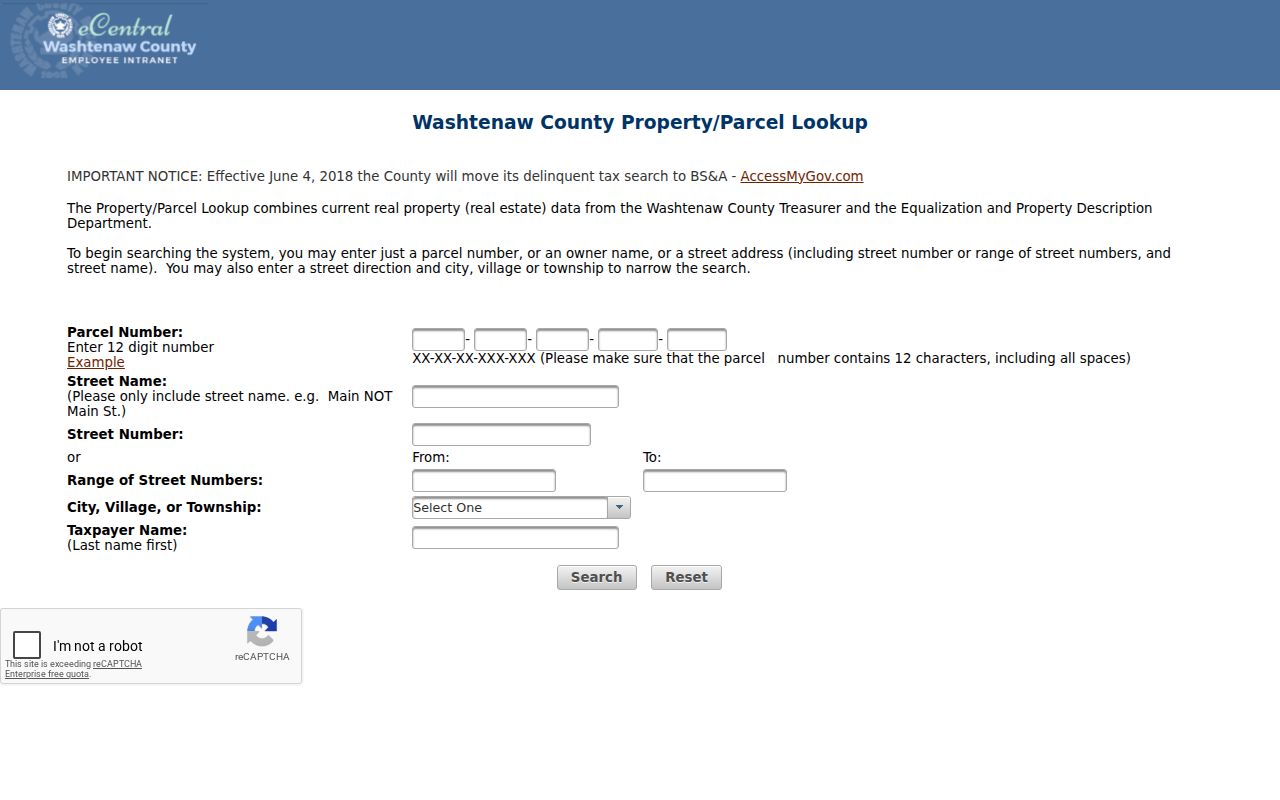
Its street, range, municipality, and taxpayer controls turn an address into a repeatable query.
MapWashtenaw for Resident Context
MapWashtenaw layers parcel geometry, aerial photography, and natural features onto a parcel result. It adds topographic detail as well. It helps distinguish nearby lots. It can also show which parcels meet at a boundary. The map is not a survey, title record, or legal description. It is not proof of occupancy either. County GIS material warns that spatial, attribute, currency, completeness, and representation errors can occur. Keep the map date in mind. Confirm any boundary with the parcel record, plat, survey, or deed legal description.
The official MapWashtenaw launch page is pictured here. It works best after a property search has supplied a PIN. The search should also supply the municipality.
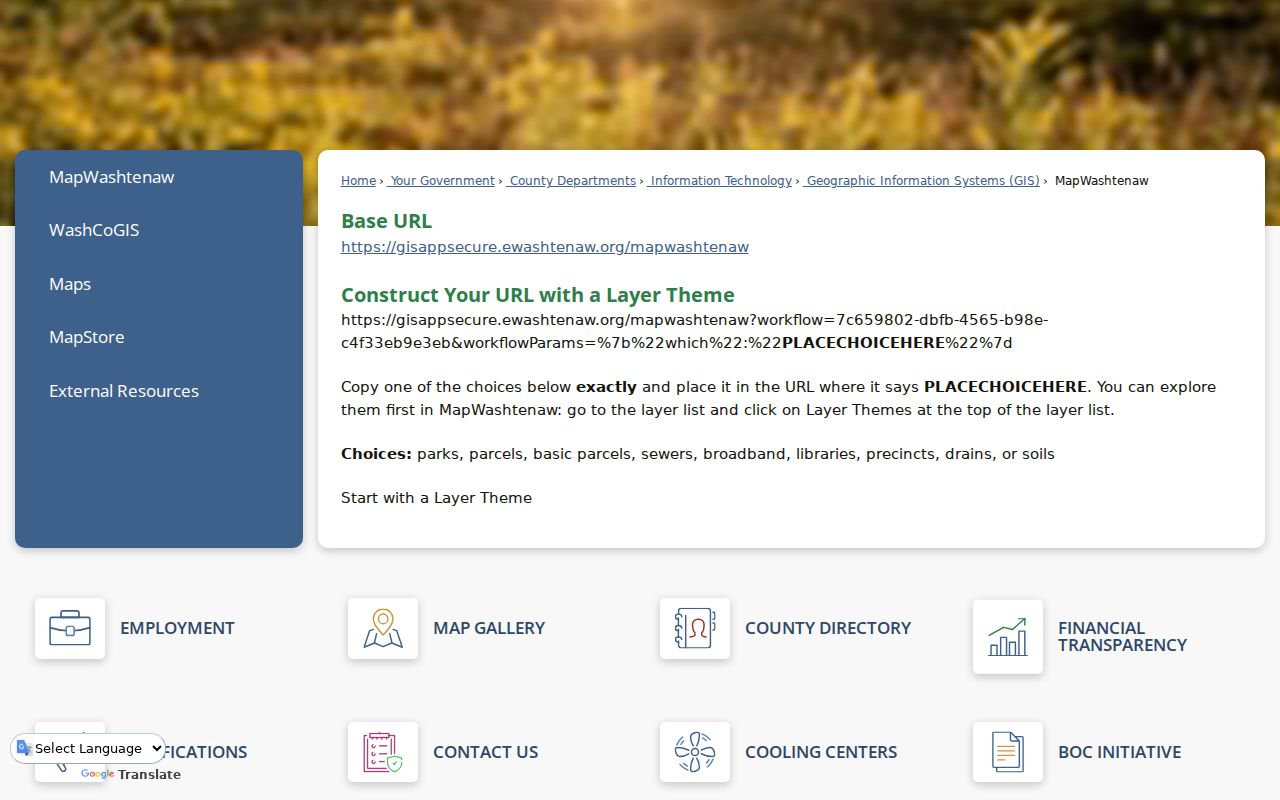
Aerial and parcel layers give local context. The Register index remains the source for recorded transfer details.
Current Washtenaw Resident Directories
Current public sources answer narrow questions about Washtenaw households. The property roll identifies the tax and parcel relationship. The deed index identifies parties to recorded documents. Voter information is public through Michigan's rules, though protected fields and Address Confidentiality Program registrations are withheld. Court, business, license, and custody systems each have their own scope. Keeping those roles separate stops a Washtenaw residents directory search from confusing a public mention with current residence.
| Source | Who It Lists | Keeper | Access |
|---|---|---|---|
| Parcel/tax roll | Taxpayer and parcel relationship | County Property/Parcel Lookup | Public search, with accuracy disclaimer |
| Voter status and QVF | Registration context and defined geography | Michigan elections offices | Public subject to redactions and ACP withholding |
| Recorded land index | Parties to deeds, mortgages, and releases | Clerk/Register of Deeds | Public index; copies use login or request route |
| Court case index | Public party, case, status, and disposition fields | MiCOURT and local courts | Nonpublic files and filters apply |
| Business or license record | Legal role or credential status | LARA and County Clerk | Not proof of a current home address |
For a one-person question, compare at least two attributes. Full name plus a date, parcel, municipality, or record number works well. That habit keeps same-name results in a resident lookup from becoming false matches.
Washtenaw Voter Records and Privacy
Michigan voter-registration records are public through FOIA. But that rule is not an invitation to expose everything. Withheld items include driver-license or state-ID numbers, month and day of birth, phone, and email. Digitized signatures, the last four digits of a Social Security number, refusals to register, and Address Confidentiality Program records are withheld too. The Michigan Voter Information Center is the current official registration and polling route. A geographic voter-file request is separate. It can be scoped to a county, jurisdiction, district, ward, precinct, school, or village.
Michigan's voter-information guidance appears below. Treat an election record as dated administrative evidence. It is not a public street roster or occupancy guarantee.
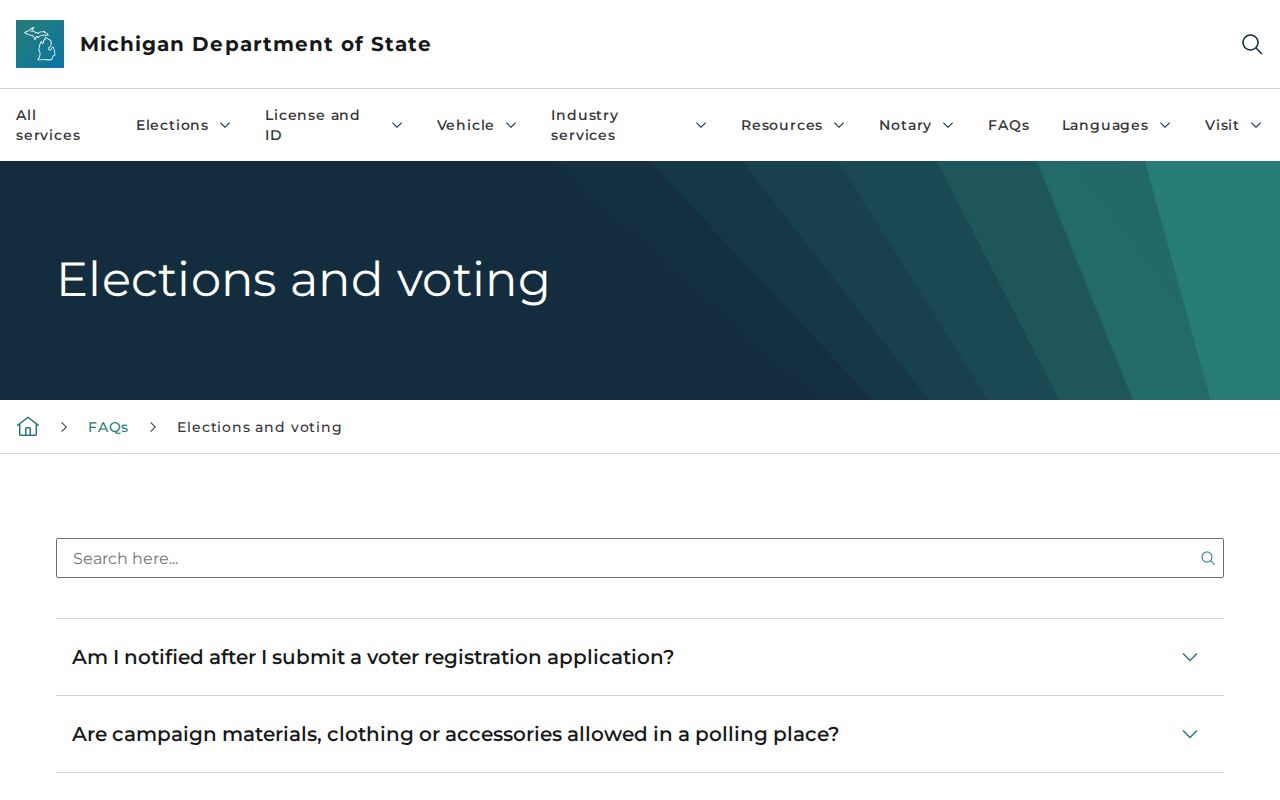
The state's redaction rules and ACP exclusion stay in force. They apply even when a request covers a defined geography.
Historical Washtenaw Resident Directories
Older Washtenaw residents live on the directory shelf at the Ann Arbor District Library. That shelf runs deep. AADL puts Ann Arbor city directories from 1868 through 2001 online for searching and browsing. Print and staff-assisted holdings add Ypsilanti and county volumes. A single directory year can yield real detail. Expect a name, address, and occupation. Household notations can appear too. An owner or renter mark, a phone listing, or a street sequence may also show up. None of that proves where a person lived in any other year. Reading the entries takes method. The full runs and the gaps are laid out in the Washtenaw city directories collection. The entry-reading method is there too.
County land records are documented from 1827. AADL also holds Washtenaw census microfilm from 1830 to 1930. Sanborn maps run from 1888 to 1948. These sources pay off most when a past street name or number has changed.
AADL’s Washtenaw Directory Shelf
The AADL Archives page describes both the digitized directory run and the wider local-history collection. The Downtown branch keeps the paper trail. Its third-floor Local History area holds directories, periodicals, yearbooks, local newspapers, maps, atlases, Sanborn microfilm, and census microfilm. Archive searching is flexible. Format and year controls include a publication-year sort and a year limiter. Not every physical holding is digitized. The physical archive is staff-assisted rather than an open stack.
When a modern portal has no historical answer, the AADL archive interface supports a dated household search. Keep the edition year plus the page or item reference. That matters most where the collection has gaps.
Washtenaw Court Name Searches
Court indexes answer one question well: what role a name played in a case. They never prove residence. MiCOURT offers public name or business searching for participating courts. A year, number, or case-type route also exists. Public results can show court, location, type, case number, filing and disposition dates, status, agency, and judge fields when the case type supplies them. Limits are built in. Nonpublic material is omitted, and MiCOURT applies a seven-year criminal display filter. Washtenaw Trial Court Odyssey and Ann Arbor's 15th District Court run their own local routes, each with limits and request procedures.
The MiCOURT public search is the tool to open. Match a case number or another confirming attribute first. A name hit alone is not the right person.
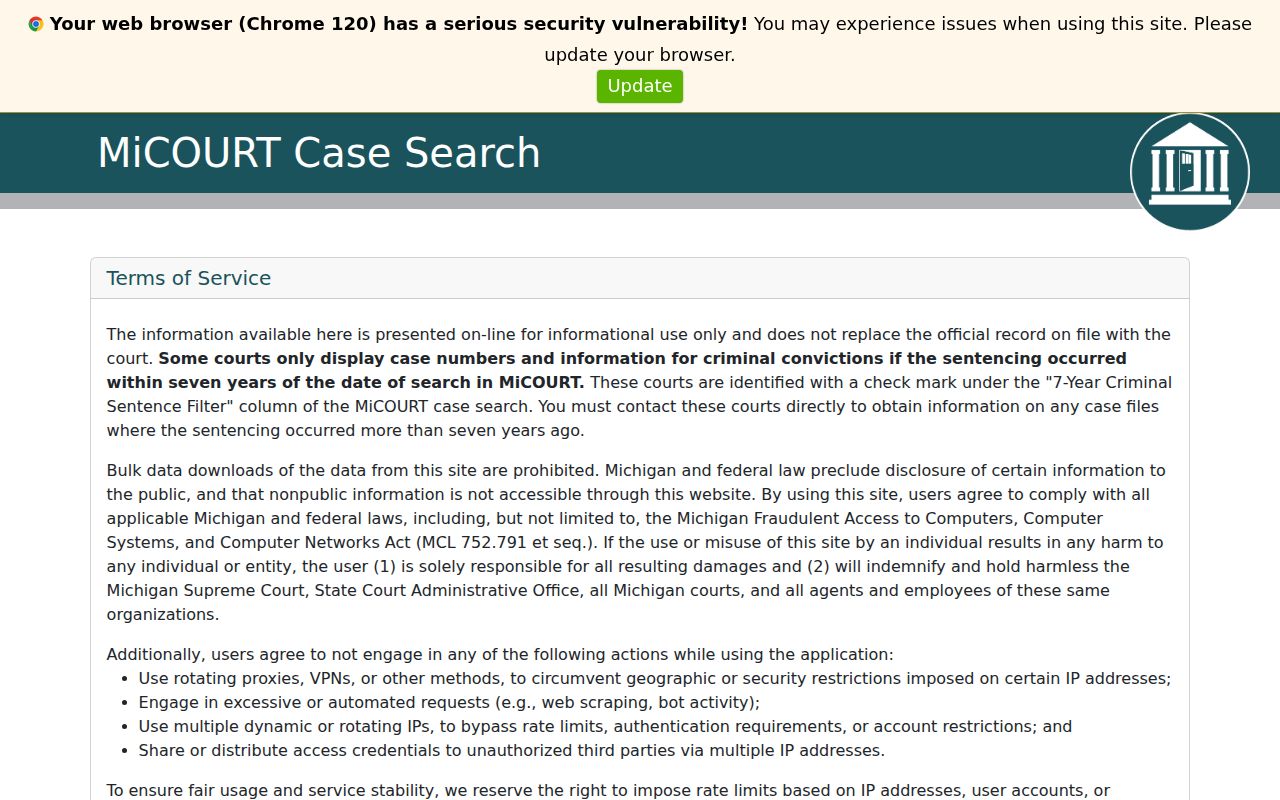
A court index shows a case, not a whole person. It reports a case relationship and its public status, never a complete profile of a party.
Washtenaw Vital Record Paths
Washtenaw County has recorded births and deaths locally since 1867. Local vital services route through the County Clerk/Registrar. For certified copies, the statewide route is Michigan MDHHS Vital Records. Death, marriage, and divorce records are generally available on written request. A prepaid search fee applies under MCL 333.2882. Birth records under 100 years carry eligibility and identification requirements. After 100 years, a birth record is public for certified-copy eligibility. Archive transfer follows separate 75-year and 110-year thresholds under MCL 333.2885.
Confirm current cost, processing, and identity requirements on the official MDHHS order page. Confirm the order method there before sending payment or documents. County and state copy routes serve different needs. A historical index is not a certified record.
Official Sources Versus Compiled Listings
Official records explain themselves. They say what the record means, when it was created, and what has been withheld. A compiled people-search listing is different. It may merge public filings, old directory data, marketing data, and purchased datasets, with matching and update practices that vary. Check the source record first. Its office, date, and access rule can be verified, which a merged profile cannot match. When an official portal ends, fall back on its request desk, counter, archive, or library. Skip the unverified profile.
| Official route | Compiled listing category |
|---|---|
| Names a custodian, date, scope, and request path | May not state a source date or matching method |
| Preserves statutory redactions and correction route | May carry stale or mismatched data |
| Can be verified against an original record | Needs independent confirmation before reliance |
Washtenaw Resident Record Safety
Public access has hard edges. Michigan's Address Confidentiality Program gives eligible people at risk a substitute address and mail forwarding. Those registrations never appear in voter material. Leave protected addresses alone. Do not reproduce a signature, and do not treat a phone number, date of birth, or mailing address as a reason to target someone. Michigan FOIA, MCL 15.231 et seq., opens existing non-exempt records. It cannot force a custodian to build a list. Nor can it unlock protected material.
Lawful personal research only. Verify a record with its custodian and never use address or identity information to stalk, harass, threaten, or harm another person.
Michigan's anti-stalking law, MCL 750.411h, covers repeated unconsented contact and harassment. Urgent safety concerns belong with police or victim services, not a directory search.
Washtenaw Land Records Since 1827
Washtenaw land records are documented from 1827. The online index has a cutoff, and the county publishes no clear statement of where that cutoff falls. That gap shapes strategy. Start online when a parcel report gives a sales-history Liber/Page lead. Then work the public Register index with spelling variants. The underlying document may sit behind a login, a purchase, or a mailed copy request. Older searches do not stop there. Deed books, plats, Archives of Michigan series, and the Bentley Historical Library's Washtenaw Abstract Company finding aid cover records circa 1824 to 1954.
The County Register of Deeds office supplies the official land-record route. Treat the index as a catalog. It points to a document but is not the document itself.
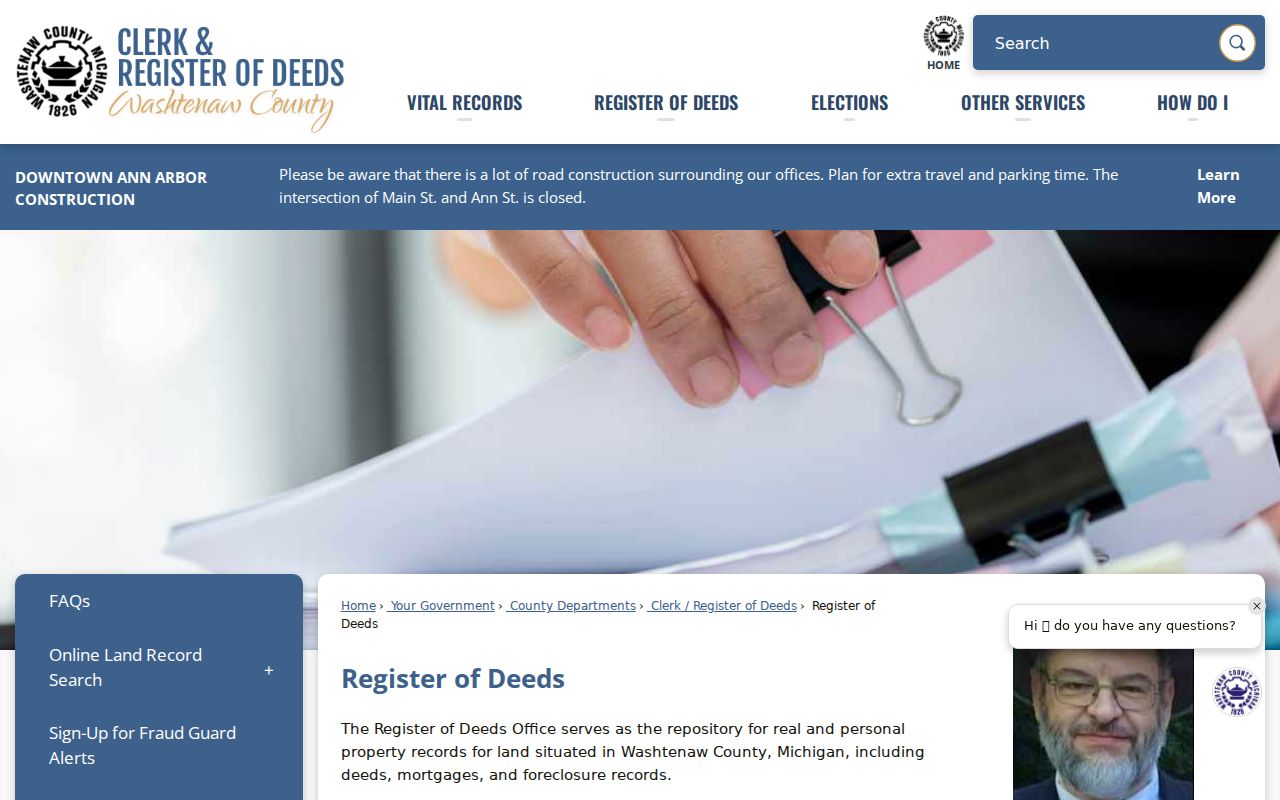
A mail copy costs $1 per page. Certified documents run $5, with payment and a self-addressed stamped envelope required.
Washtenaw Records Search Starting Point
Think of the county's search and request hub as a switchboard. It routes questions to the office that keeps the record. The page gathers links for land, parcels, voter rolls, permits, business names, taxes, and historic resources. It also covers formal records requests. It holds no resident database itself. When a lookup stalls at one portal, that is normal here. A permit file, probate record, historic survey, or clerk-held request may sit elsewhere in Washtenaw. The routing page points the way. Requests move faster with details. Name the office, the record type, the location or identifier, and the date range.
Washtenaw's records-search hub appears below. Use it to reach the custodian who truly maintains the record you need.
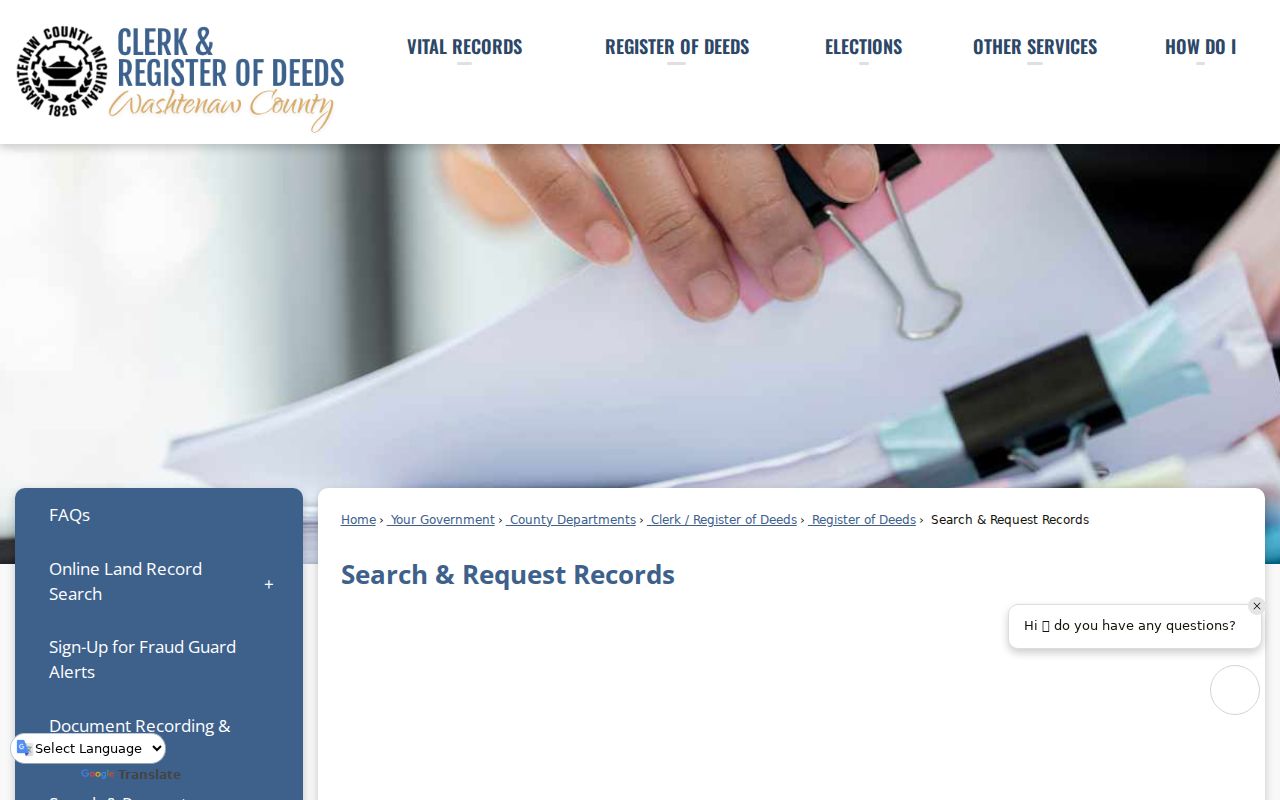
A precise request beats a vague one. Washtenaw offices work faster when you supply specifics instead of asking them to identify a person from a partial description.
Washtenaw Public-Safety Record Limits
Custody and registry tools serve narrow purposes. Washtenaw County Corrections posts custody, mail, bond, and visit details, though it publishes no county name-search roster. MDOC OTIS covers a different population entirely. The Michigan State Police registry has its own public-safety scope. Merging results on a name alone invites errors. For a defined safety question, a separate official route exists, but none of these sources functions as a general residents directory for Washtenaw.
Michigan's public registry search appears below. Follow its official scope and instructions, and never republish registry information to harass or intimidate anyone.
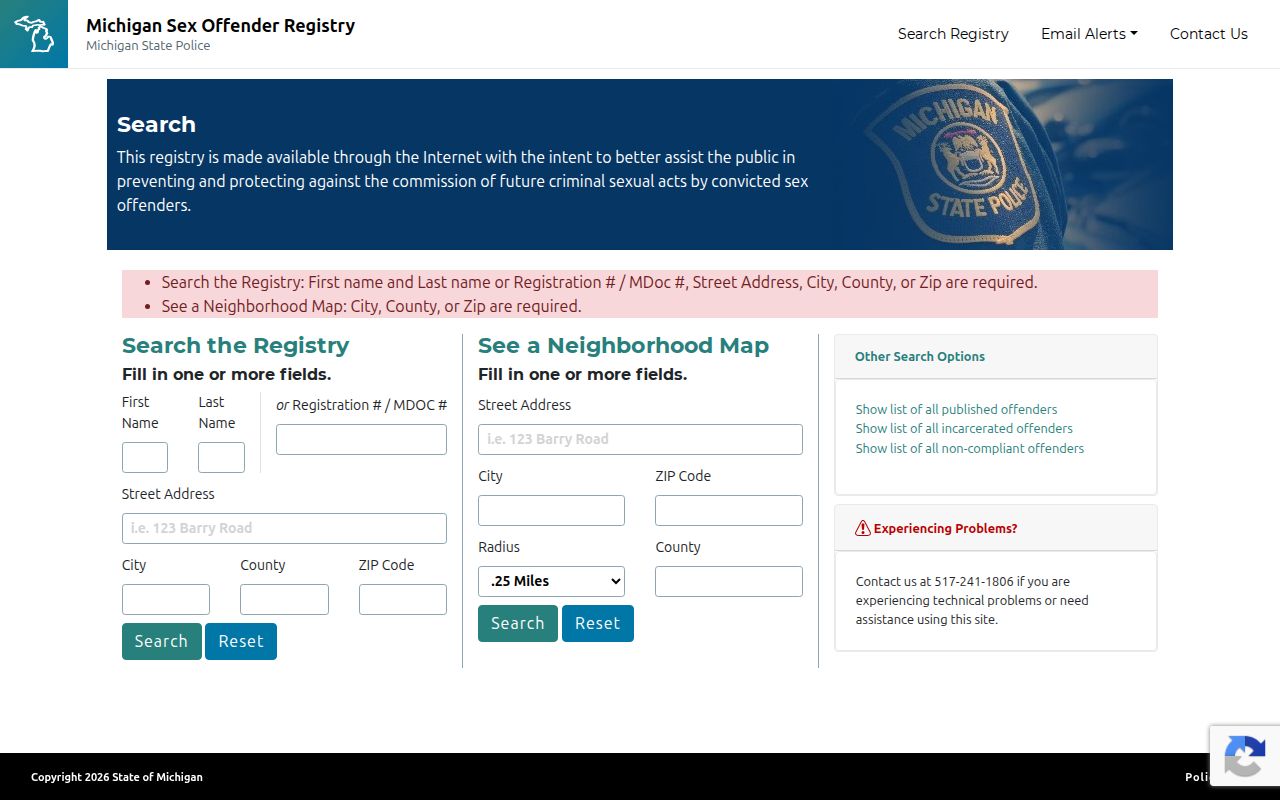
Call the proper law-enforcement agency for urgent concerns.
Washtenaw Business Role Searches
A business filing offers a dated legal-role clue, not evidence of where someone lives now. The Michigan MiBusiness Registry handles entity searches, filings, certificates, and related records. An individual-name result may point to a registered agent. It may instead name an officer, director, member, manager, or another filing role. Write down the entity number. Also note the role, the filing date, the status, and the address type. Then turn to a source suited to your actual question. Do that before linking that record to any person.
Michigan's MiBusiness Registry route appears below. The current portal launched in 2025, so older guides may not match its live labels.
A business result describes a legal filing relationship. It should never be presented as proof of a Washtenaw residence.